Retaining Walls in Clark County, WA
Segmental block, natural stone and boulder walls engineered to hold Clark County grades and drain properly behind the face.
Get a Free EstimateA retaining wall is a structure, not decoration. It is holding back tons of saturated clay, and in this climate that clay is saturated for six months of the year. The walls that fail around here almost always fail for the same reason: nobody dealt with the water behind them.
Drainage is the whole job
Behind every wall we build there is a column of clean drain rock, wrapped in filter fabric so the surrounding soil cannot silt it up, with a perforated pipe at the base daylighted to somewhere the water can actually go. Without that, hydrostatic pressure builds behind the wall until it leans, bulges and eventually comes apart.
The base is just as important. We dig below the frost line onto undisturbed soil, put down compacted crushed rock, and bury the first course. A wall that starts level and buried stays straight; one that starts on topsoil does not.
Height, engineering and permits
Once a wall gets tall, or is holding up a driveway, a structure or a slope above it, it typically needs engineering and a permit. In most Washington jurisdictions the trigger is around four feet measured from the bottom of the footing to the top of the wall, and surcharge loads can pull that threshold lower.
We will tell you honestly which side of that line your project falls on. If it needs an engineer, we will say so rather than quietly building something undersized — and on taller walls we install geogrid reinforcement back into the retained soil at the spacing the design calls for. Confirm the specifics with your local building department, since requirements vary between the county, Vancouver, Camas and the smaller cities.
Wall types we build
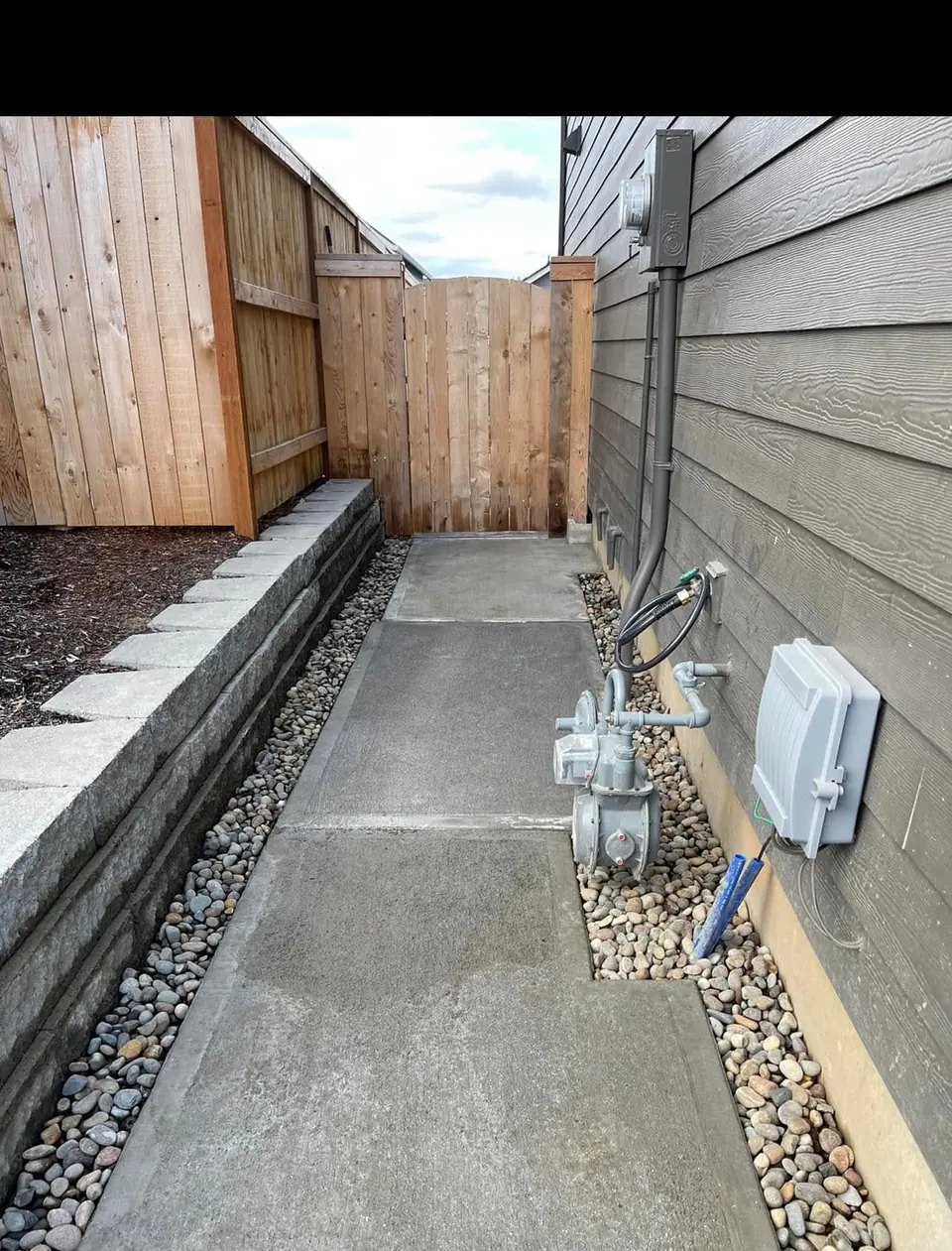
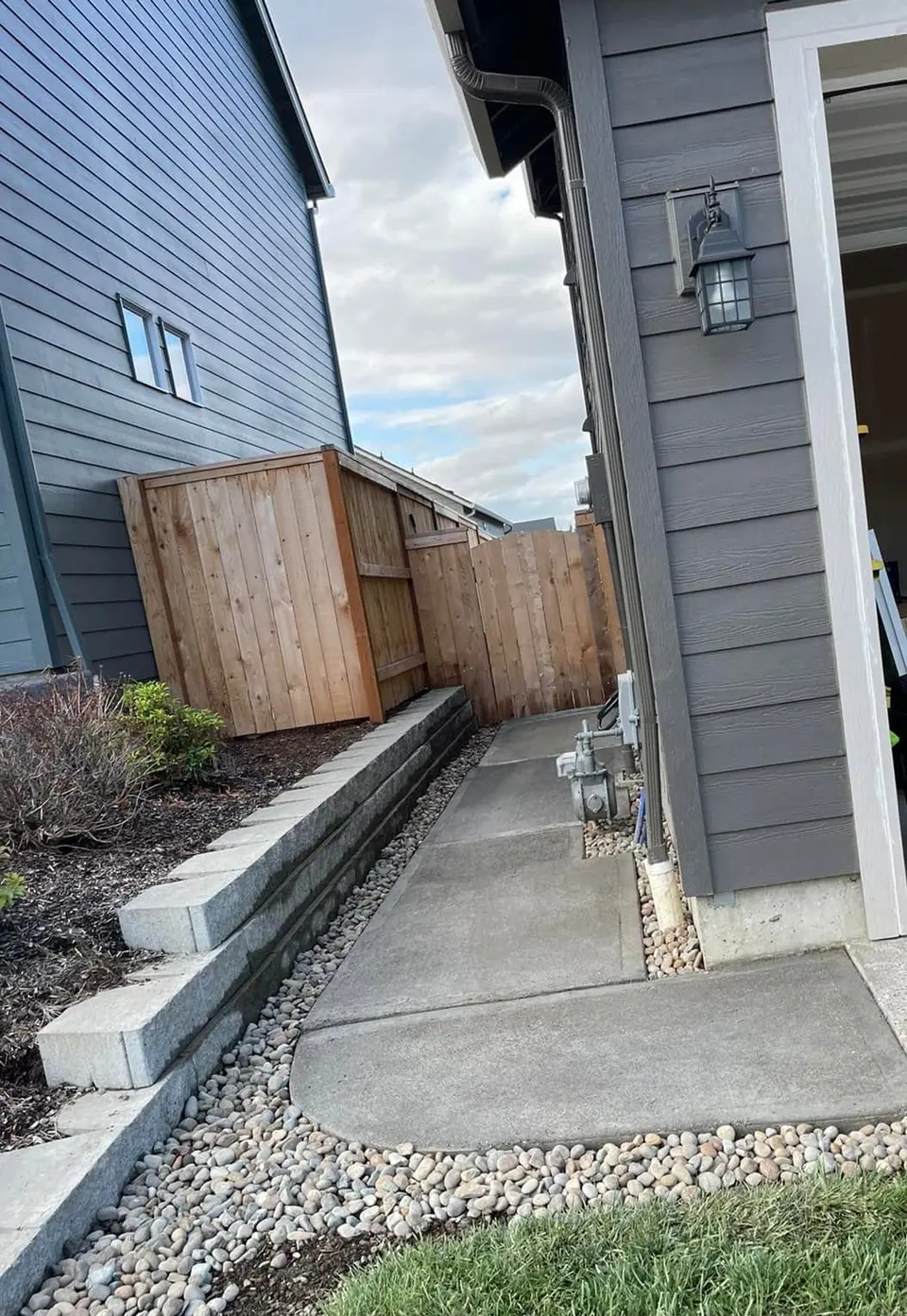
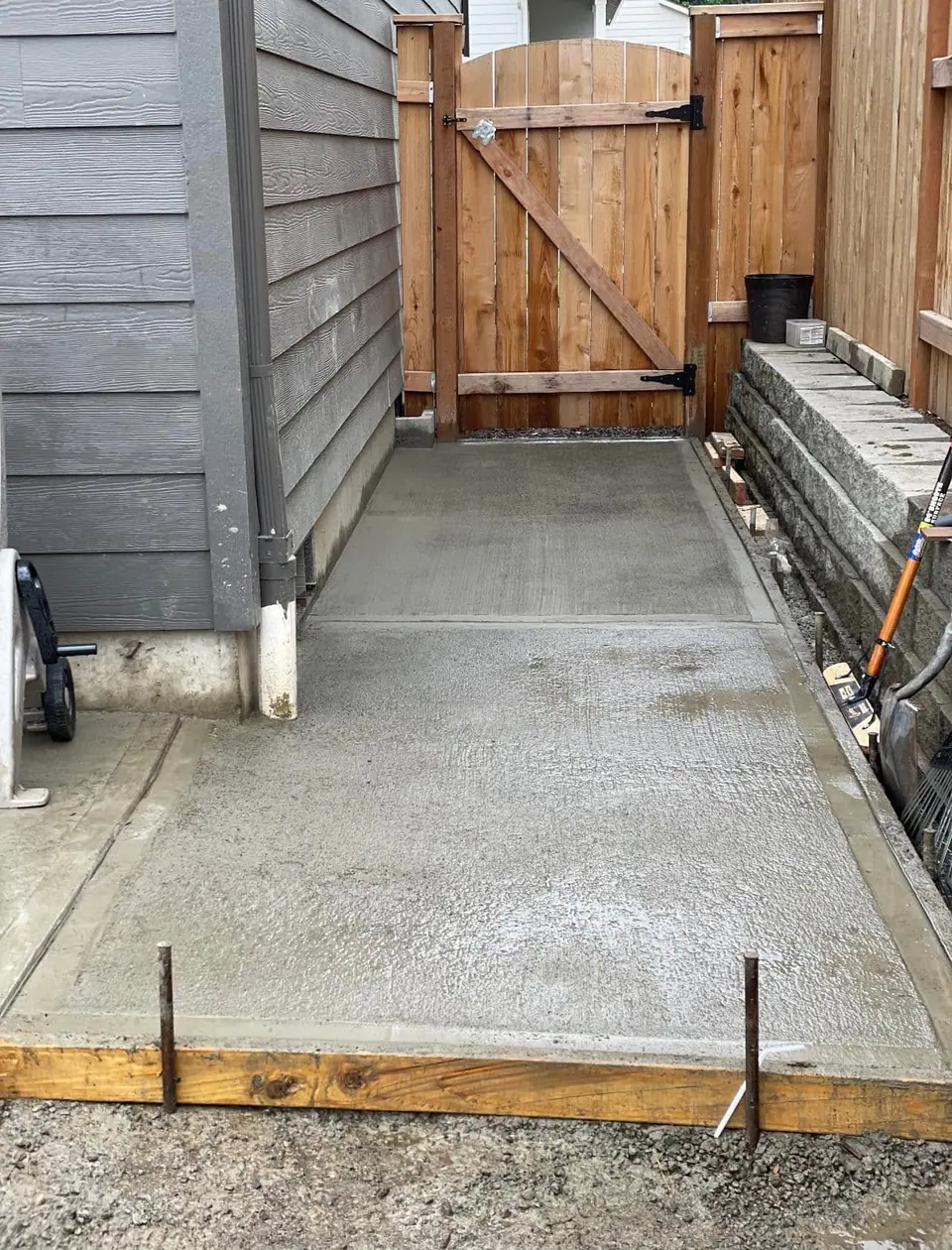
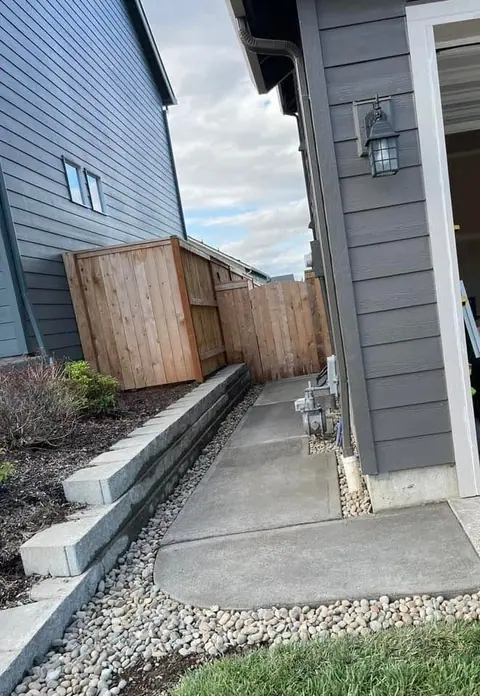
Segmental concrete block for clean, uniform lines and predictable engineering. Natural rock and boulder walls when the look should read as part of the landscape. Terraced walls to break a tall grade into two shorter, cheaper structures with planting space between. Seat walls, planter walls and steps integrated into patios.
What is included
- Compacted crushed rock footing on undisturbed soil
- Buried base course for stability
- Clean drain rock and filter fabric behind the full face
- Perforated drain pipe daylighted to a real outlet
- Geogrid soil reinforcement where the design requires it
- Honest guidance on when an engineer and permit are needed
Every quote is fixed and in writing. We walk the site, tell you what the job actually needs, and price it. If we find something during the walkthrough that changes the scope, you hear it then — not as a change order halfway through.
Retaining Walls by city
Local conditions change what this job takes. Pick your area for the specifics.
Need retaining walls?
Free on-site estimates across Clark County. We walk the property with you, tell you what it actually needs, and put a fixed price in writing.
Retaining Walls: common questions
How tall can a retaining wall be without a permit?
The common threshold across Washington jurisdictions is about four feet, measured from the bottom of the footing to the top of the wall — but if the wall carries a surcharge such as a driveway, a slope or a structure above it, engineering is usually required at a lower height. Requirements differ between Clark County and individual cities, so always confirm with the building department that covers your address.
Why is my existing wall leaning?
Nine times out of ten it is water. If there is no drain rock and pipe behind the wall, saturated clay pushes against the back of it every winter and the wall slowly rotates forward. The other common causes are a footing set on soft or uncompacted soil and a missing buried base course. A leaning wall does not correct itself and gets more expensive the longer it sits.
Can you build a wall against my property line?
Often yes, but setbacks, easements and the drainage outlet all need checking first, and the excavation behind a wall usually needs more room than people expect. If the wall would affect a neighbor’s grade we will raise it before we quote.
Block or natural rock?
Block gives you straight, uniform lines, predictable engineering and a lower cost per square foot of face. Boulder walls look softer and more natural and suit rural and wooded properties, but they need machine access and take up more depth. We build both and will show you photos of each from local jobs.
What actually holds a retaining wall up?
A compacted footing below grade, the mass and setback of the block itself, drain rock and a drain line behind it, and geogrid tied back into the retained soil where the height calls for it. Homeowners tend to judge a wall by the face. Everything that decides whether it is still straight in fifteen years is behind it.
Why does a retaining wall need drainage behind it?
Because saturated soil is dramatically heavier than dry soil and pushes far harder. Between October and May our ground is wet more or less continuously, so a wall with no drain rock and no outlet is holding back a wall of water as well as earth. That hydrostatic pressure is the single most common reason walls here lean, bulge and fail.
How deep does the footing go?
The first course is buried — as a rule of thumb, roughly a tenth of the wall height, on a compacted aggregate base, with more on soft ground. Getting that base dead level matters more than anything above it, because every error in the first course is multiplied by the time you reach the top.
What is geogrid and does my wall need it?
It is a structural mesh laid in horizontal layers back into the soil behind the wall, turning the block and the earth behind it into one reinforced mass. Short garden walls generally do not need it. Once a wall gets tall, or carries a slope, driveway or structure above it, it usually does — and a wall that needed it and did not get it will eventually tell you.
What is a surcharge and why does it change the design?
A surcharge is any extra load above the wall — a driveway, a parking area, a slope continuing up, a shed or a pool. It increases the force on the wall considerably, and it often pushes a wall into needing engineering at a lower height than an unloaded one. It is one of the first things we look for on the walkthrough.
Can you fix a leaning wall, or does it have to come out?
Be sceptical of anyone who answers that without looking. A wall that has moved has usually moved because of what is behind it, so cosmetic repairs to the face tend to buy a year or two. Sometimes a section can be rebuilt; often the honest answer is that it comes down, gets proper drainage and goes back up. We will tell you which.
Do you build terraced walls instead of one tall one?
Frequently, and on a sloping lot it is often the better answer both structurally and visually. Terraces need care though — set them too close together and the upper wall becomes a surcharge on the lower one, so it is two walls behaving as one tall wall. Spacing is a design decision, not a landscaping preference.
How long does a retaining wall take to build?
A modest garden wall is a couple of days. A tall wall with excavation, geogrid, drainage and backfill runs one to three weeks depending on length, access and how much material has to move. Wet-season builds can run longer, because you cannot compact backfill properly in saturated conditions and we will not pretend otherwise.
Can you get machinery to the wall, or is it hand-built?
It depends on access, and it changes the price more than most homeowners expect. Gate widths, side-yard clearance, slope and overhead lines all decide whether block and rock get moved by machine or by wheelbarrow. We check access at the walkthrough so the number we give you already accounts for it.
What is behind the wall once it is backfilled?
Clean drain rock against the block, a perforated drain line at the base running to a real outlet, and geotextile separating the rock from the native soil so the two do not mix over time. Skip the geotextile and the soil silts up the rock within a few years, at which point the drainage stops working and you are back to hydrostatic pressure.
Where does the water from behind the wall come out?
To daylight wherever the site allows, or into a drainage system that has somewhere real to go. A drain line that stops in the middle of a backfill is decoration. On flat lots this is the hardest part of the design and it is worth getting right, because it is the part that keeps the wall standing.
Can a retaining wall double as seating or planters?
Yes, and it is one of the better ways to make a functional wall earn its place. Seat height walls around a patio, planter walls stepping down a slope, and integrated steps all work well. The caveat is that a seat wall and a load-bearing retaining wall are different structures, and where one becomes the other the build changes.
Do I need an engineer for my wall?
Once a wall passes the height threshold in your jurisdiction, or carries a surcharge, engineering is usually required — and the thresholds are lower with a surcharge. We will tell you when we think you are in that territory and what to ask your building department. It is not a cost we can wish away for you.
What blocks or stone do you use?
Segmental wall block for anything structural, in the colour and face texture you choose, and natural rock where the look calls for it and the height allows. The choice is partly aesthetic and partly structural — some faces and setbacks handle height and geogrid better than others, so we narrow the options to the ones that suit your wall.
How long should a properly built wall last?
Decades, with no maintenance beyond keeping the drainage outlet clear and not stacking soil or a new patio on top of it without asking. Walls here rarely fail from old age. They fail from water, from a surcharge nobody planned for, or from a base that was never compacted.